


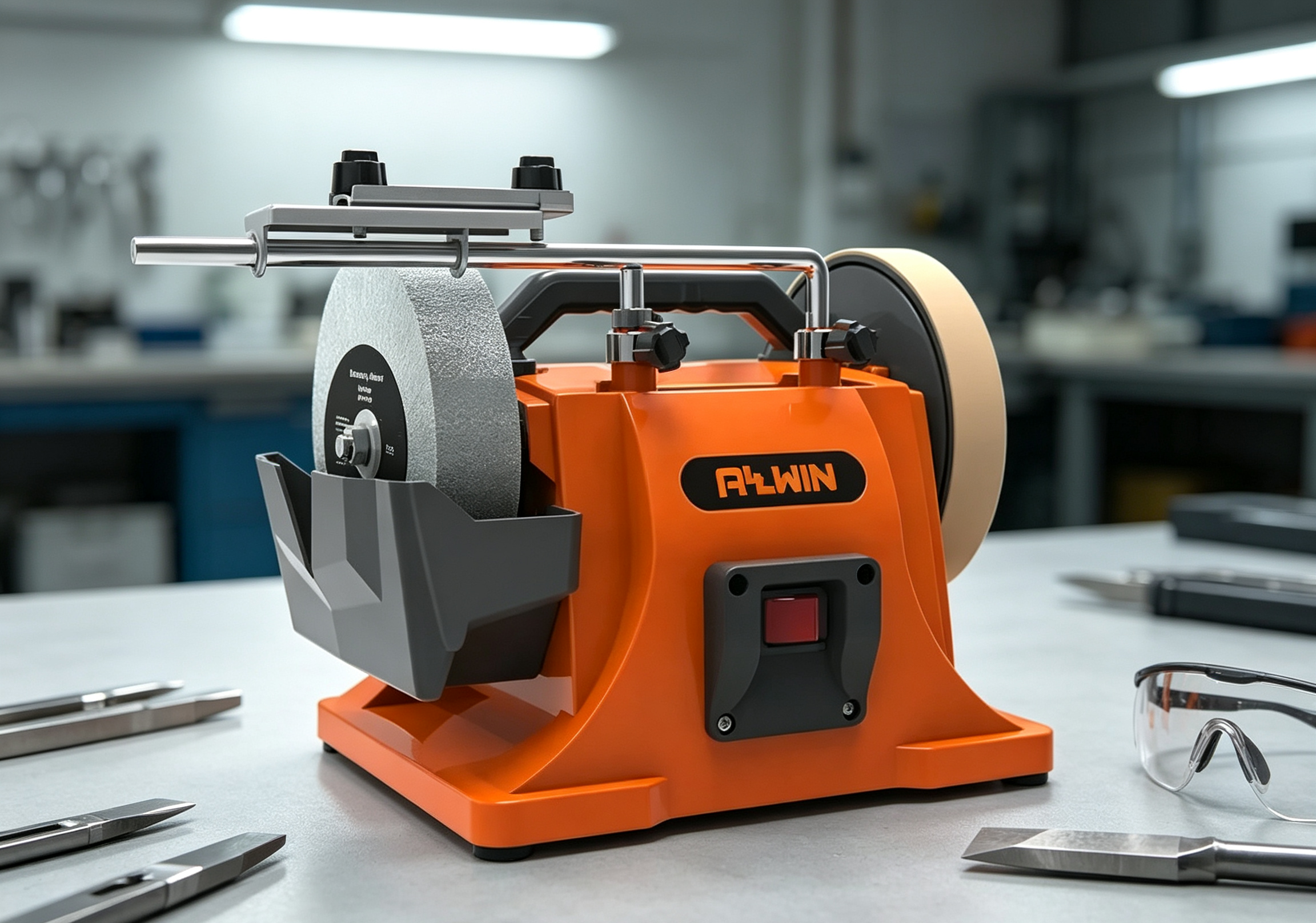
Desktop knife sharpeners are the basic equipment for standardized tool grinding in industries such as woodworking, catering, livestock maintenance, and hardware processing. The material, blade shape, and usage intensity of tools in different industries vary significantly. Simply relying on power comparison can easily lead to problems such as low grinding efficiency, tool annealing, and insufficient edge accuracy. The following is a breakdown of the selection logic, core parameters and general pit avoidance specifications based on the working conditions of each industry.
一、Classification of adapted models by industry
1. The woodworking industry is a typical application scenario for desktop knife sharpening machines. There are many types of woodworking tools, including saw blades, planers, router knives, wire knives, etc. When selecting a model, priority should be given to the tool type coverage capability of the equipment. If the workshop has a variety of tools such as planers, milling cutters, saw blades, etc., multi-purpose and multi-functional knife sharpening machines are usually more worthy of priority comparison. In addition, woodworking tools have high requirements for edge sharpness, and the grinding wheel particle size should be selected to take into account the dual requirements of rough grinding and fine grinding.
2. The metal processing industry has strict requirements on the accuracy of knife grinders. The sharpening of metal cutting tools such as turning tools, milling cutters, drill bits, and reamers directly affects the cutting quality and tool life of the machining center. When selecting, spindle runout should be the main consideration. High-precision equipment must ensure that tool runout is within 0.005mm after grinding. The clamping diameter range is also critical. The common spring sleeve clamping range is between Φ3 and Φ16mm, which needs to be matched according to the size of the daily processing tools. For carbide tools, it is recommended to choose a model equipped with a diamond wheel dresser.
3. The knife sharpening needs of the printing and papermaking industry have distinctive characteristics. This type of industry mainly sharpens various types of slat-shaped straight-edged blades, such as paper cutter blades, linkage line knives, toilet paper scrapers, etc. Equipment selection should focus on the tool table structure and worktable length to meet the clamping and grinding needs of long blades. Functions such as electromagnetic chuck-type tool table, automatic reciprocating of the grinding head, and CNC speed regulation are typical configurations of this type of equipment.
4. The tools used in the leather and plastic industries are mainly cutting knives, slitting circular knives, and special-shaped blades. This type of tool has high requirements for edge consistency and grinding accuracy, but the focus of equipment selection lies in the flexibility of the clamping method and ease of operation. The tiltable mobile worktable is designed to make it easy to adjust the tool processing angle, making it an ideal configuration for such application scenarios.
5. Hardware processing and carbide tool processing: The tool hardness is relatively high, and the model needs to support grinding wheel replacement. It is suitable for diamond and aluminum oxide consumables, and can take into account rough rust removal and mirror finish grinding.
二、Comprehensive consideration in model selection:Don’t fall into the “one-size-fits-all” trap when selecting a machine – no one piece of equipment can perfectly grind all types of tools.
1. The correct approach is: first clarify the mainstream tool types and size range; secondly determine the accuracy requirements (radial runout, angle control accuracy); re-evaluate the operation complexity and type change efficiency; and then make decisions based on the comprehensive equipment purchase cost and long-term operation and maintenance cost. On-site test grinding is a reliable means of verifying equipment performance. It is recommended to carry typical worn tools for actual testing.
2. The selection of desktop knife sharpening machine is essentially a systematic project that well matches industry characteristics, tool requirements, operating frequency and equipment parameters. Only based on actual working conditions can a better balance between grinding efficiency and processing quality be achieved.
Post time: Aug-20-2026