


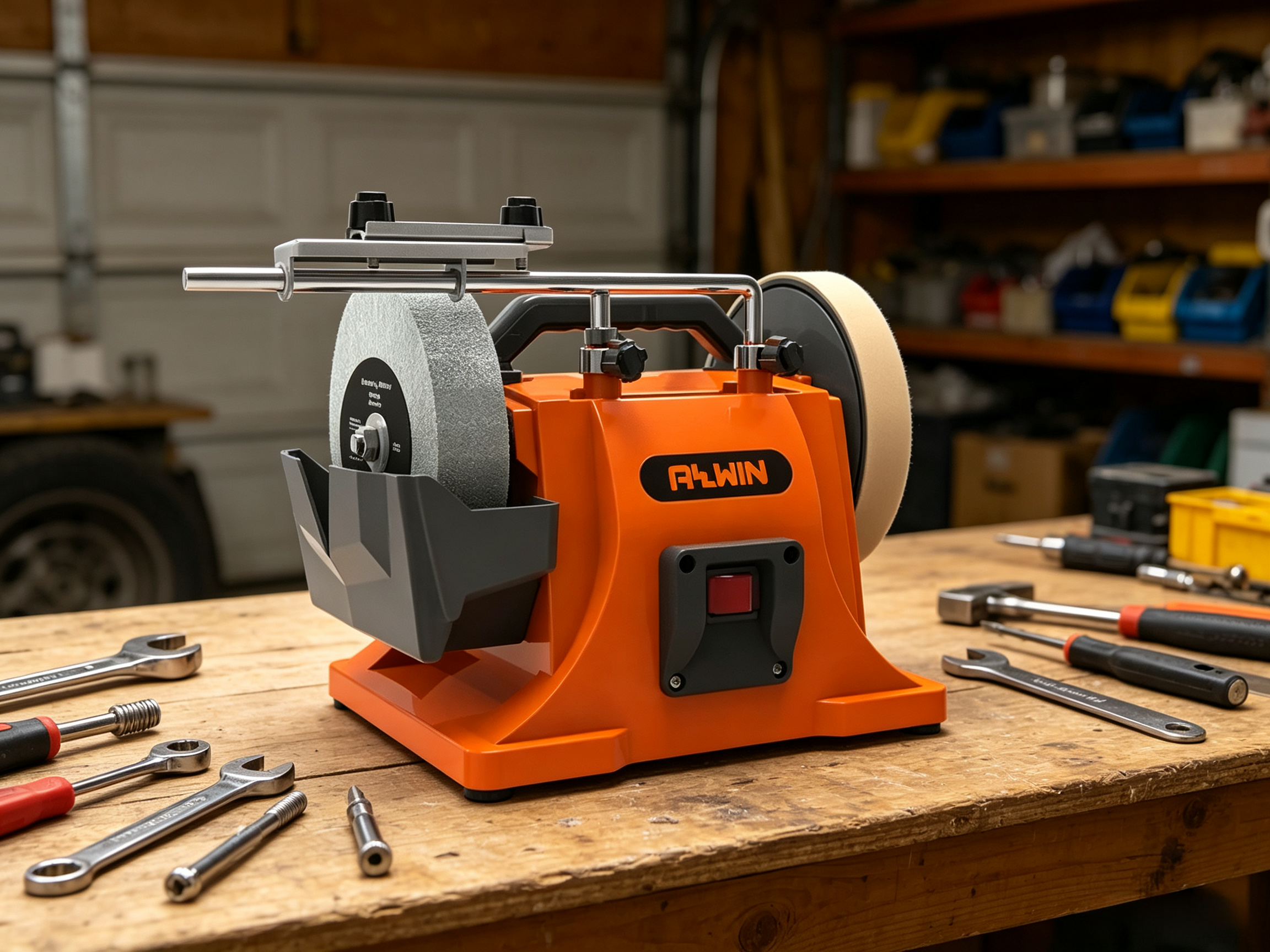
Different working environments, workloads, and equipment statuses have completely different polishing methods, working condition adaptation logic, and efficiency-enhancing machine maintenance techniques. If you want to take into account polishing quality, operating efficiency and equipment life, you need to master the general working condition adaptation system. This article covers all common scenarios such as dry and wet environments, light and heavy loads, new and old equipment, daily scattered operations, and batch operations. There is no scenario limitation. It explains universal adaptation techniques and efficient efficiency enhancement methods. Please consider your own usage scenarios.
1. Universal adaptation logic and selection principles for dry and wet polishing
Dry grinding and wet grinding are two general grinding modes, suitable for different working conditions, and each has its own advantages and disadvantages. Dry grinding is the most versatile and is suitable for most conventional tool grinding, daily maintenance, and light repair operations. It has the advantages of convenient operation, high efficiency, and wide application range. The disadvantage is that it is dusty and needs to be used with a dust-proof device. Core efficiency-enhancing skills of dry grinding: control the duration of a single grinding operation, dissipate heat during intermittent operations, avoid high temperature accumulation, improve grinding efficiency while protecting equipment and tools.
Wet grinding is suitable for high-precision grinding, carbide grinding, and grinding scenarios prone to high-temperature annealing. Through wet cooling and dust removal, edge burn, annealing, and dust pollution can be completely eliminated, and the polished finished product has higher precision and better edge quality. General precautions for wet grinding: Cover the grinding contact surface evenly, clean the residual water stains on the equipment promptly after the operation, and do anti-rust treatment to avoid equipment rust and circuit moisture.
2. General adaptation skills for light and heavy load conditions
For light-load daily grinding, the focus is on refinement and precision. Use fine-grained grinding wheels, medium-to-high speeds, and light and uniform feeds. Priority is given to ensuring grinding quality and tool life. There is no need to pursue excessive efficiency, and the focus is on basic equipment maintenance.
Heavy-duty batch grinding focuses on machine stabilization, efficiency improvement, and continuous operation. We select suitable power equipment and coarse and medium-grained grinding wheels, calibrate the equipment status in advance, strictly control the amount of single grinding, and adopt an intermittent operation mode to avoid excessive temperature rise and accelerated aging of accessories caused by long-term full-load operation of the equipment. Comprehensive equipment inspection and calibration is completed before batch operations, and the machine is shut down regularly to dissipate heat and clean dust during operations, effectively improving the qualification rate and efficiency of batch operations.
3. Common working condition adaptation methods for new and old equipment
The new equipment has high precision and good stability, and can be adapted to refined and high-precision grinding conditions. It follows standard procedures during operation and runs in with light load to avoid violent operation of the new machine, quickly run in to the best equipment state, and maintain long-term accuracy.
Old equipment has inherent problems such as slight vibration, accuracy attenuation, and power drop. The adaptation of working conditions should focus on stability, avoid high-precision extreme grinding and overload grinding, compensate for accuracy deviations through tightening calibration and small fine-tuning, reduce workload, adapt to conventional standardized grinding, and make up for equipment aging defects through operation optimization.
4. Core skills for efficiency improvement and quality improvement that are common to all scenarios
Unify the benchmark to increase efficiency, calibrate the equipment benchmark in advance for all operations, and unify angle, feed, and speed standards to reduce repeated debugging time and improve consistency and efficiency of operations. Adapting consumables increases efficiency. Match the grinding wheel size and material according to job requirements. Coarse sand is used for rough grinding and fine sand is used for fine grinding. Each performs its own duties to avoid low efficiency and poor quality caused by incorrect consumable adaptation.
Pre-judg the working conditions and increase efficiency. According to the grinding amount, tool material, and operation accuracy requirements, the dry and wet modes, speed gears, and operation rhythm can be selected in advance to avoid repeated adjustments during operation. Stable and efficient equipment ensures that the equipment is clean, fastened, lubricated and calibrated at all times. Stable equipment status is the core foundation for efficient operations.
5. Summary of adaptation to general working conditions
The core adaptation logic of all polishing scenarios is “scenario matching mode, load matching parameters, and equipment matching working conditions”. It is not limited to a single operating method, and can flexibly adapt to different environments and needs. It can maximize operating efficiency while ensuring equipment life and polishing quality, and adapt to normalized polishing operations in all scenarios.
Post time: Aug-20-2026