


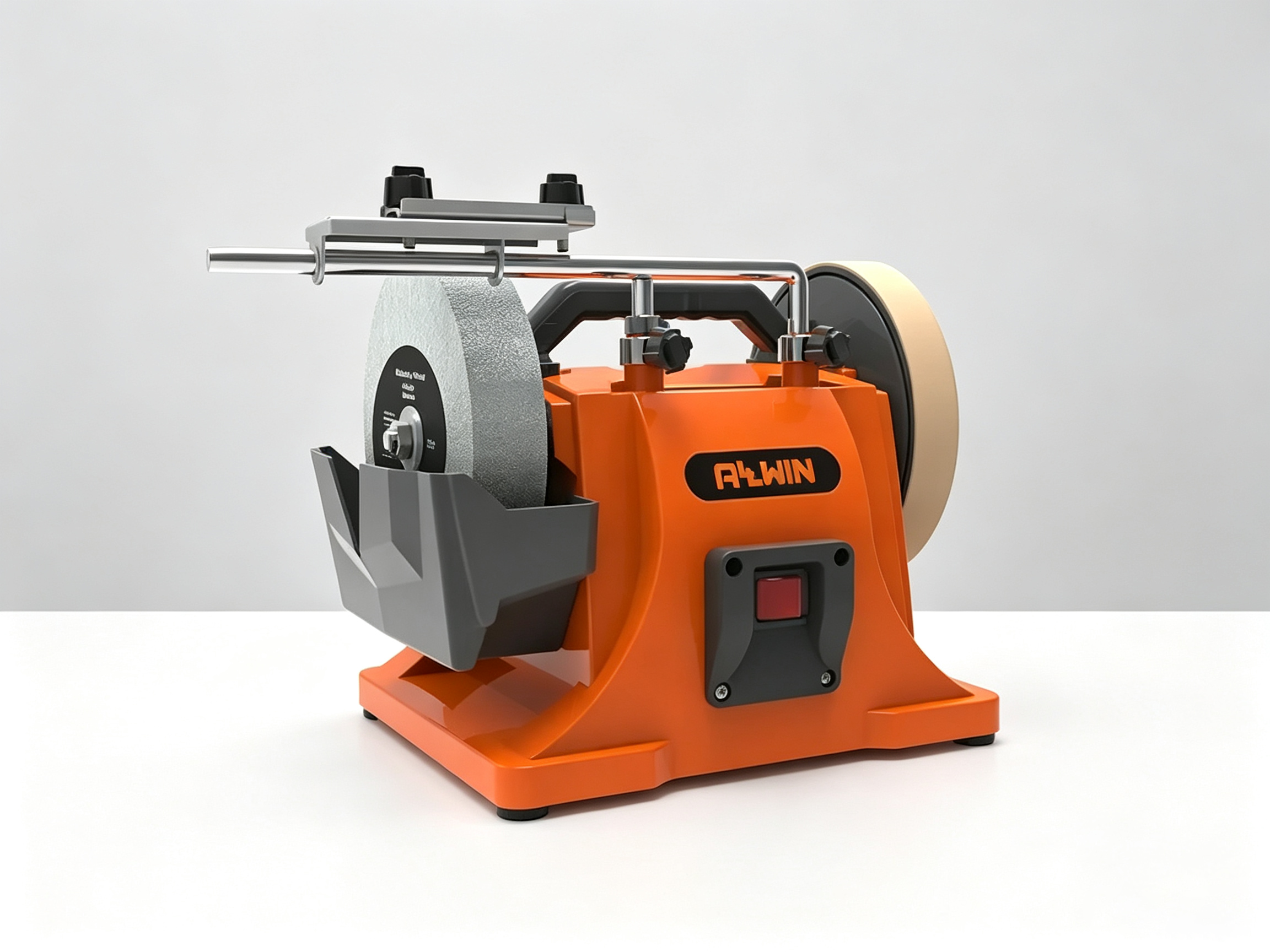
During long-term use of desktop knife sharpening machines, common common faults will occur, such as abnormal noise, vibration, poor accuracy, insufficient power, and poor grinding effect. Most faults do not require professional maintenance. They can be quickly located and repaired by themselves by relying on universal troubleshooting logic. This article summarizes the common fault problems of all models. It does not talk about the special cases of a single model. It only talks about common fault causes, troubleshooting steps and standardized repair solutions, which are suitable for all users to perform independent maintenance.
1. Abnormal noise during equipment operation
Abnormal operating noise is the most common fault and is mainly divided into two categories: mechanical abnormal noise and consumable abnormal noise. Abnormal noise from consumables is mostly caused by problems with the grinding wheel. The grinding wheel is loose, eccentric, cracked, or deformed by moisture, which will produce sharp friction sounds and beating noises. The troubleshooting method is to stop the machine to check the status of the grinding wheel, retighten it, correct the balance, and replace the damaged grinding wheel directly.
Mechanical abnormal noise mostly comes from looseness, dryness, and worn parts. Loose screws in the fuselage, dry transmission parts, stuck rails, and worn bearings will produce dull abnormal noises and frictional noises. General repair steps: first fully tighten the screws of the entire machine, then lubricate the moving parts, and finally check the wear of the bearings and transmission parts. If the wear is serious, replace it in time to completely eliminate the abnormal noise.
2. The equipment vibrates excessively and jitters, causing serious malfunctions.
The whole machine shakes and the grinding vibration is large, which are the core causes of poor grinding accuracy and uneven texture. There are four main causes: uneven placement of equipment, aging and collapse of shock-absorbing foot pads, unbalanced and eccentric grinding wheels, and loose frame connectors.
General troubleshooting and repair logic: first calibrate the level of the entire machine and replace the aging shock-absorbing foot pads; secondly correct the balance and concentricity of the grinding wheel; finally tighten all frames, brackets, and transmission connections to eliminate slack. Most vibration faults can be solved by checking in this order.
3. Insufficient power, unstable speed, and machine jamming failure
During the operation, the speed suddenly becomes too fast and slow, the grinding is weak, slight jamming, and the machine heats up. The common causes are operational problems and equipment problems. At the operational level, the problems are mostly caused by excessive feed, excessive grinding pressure, and excessive grinding amount in a single operation, which are improper human operations and can be improved by adjusting to light and constant feed.
At the equipment level, the main reasons are excessive dust accumulation in the motor, poor heat dissipation, unstable voltage, loose transmission, and aging motor. Repair methods: Clean the motor heat dissipation dust, check the power supply voltage, and tighten the transmission components. If the motor power is attenuated and aged due to long-term use, motor accessories need to be replaced to restore power performance.
4. Grinding accuracy deviation and poor finished product effect
Irregular grinding lines, angle deviations, uneven edge grinding, and local excessive wear are general precision failures. Core causes: equipment miscalibration, bracket offset, uneven grinding wheel wear, equipment vibration, and clamping datum misalignment.
General repair plan: Recalibrate the level of the whole machine and the grinding benchmark, correct the status of the grinding wheel, tighten the adjustment bracket and clamping structure, clean the impurities on the grinding contact surface, standardize the clamping and feeding operations, and then the standard grinding accuracy can be restored.
5. Equipment temperature rises too fast or abnormal heating failure
The temperature of the equipment rises sharply in a short period of time, which is mostly caused by poor heat dissipation, overload operation, transmission jamming, and circuit abnormalities. General treatment methods: stop overload operation, clean the dust in the motor heat dissipation channel, lubricate jammed transmission parts, check the circuit load, avoid long-term continuous full-load operation, reduce equipment load during intermittent operation, and prevent high temperature damage to equipment.
6. Common troubleshooting core logic
Troubleshooting of all desktop knife sharpening machines follows the general principle of “first external, then internal, consumables first, then complete machine, operation first, then equipment”. Priority is given to troubleshooting simple and adjustable problems, and then accessories and hardware problems, which greatly improves maintenance efficiency and avoids invalid disassembly.
Post time: Sep-02-2026