


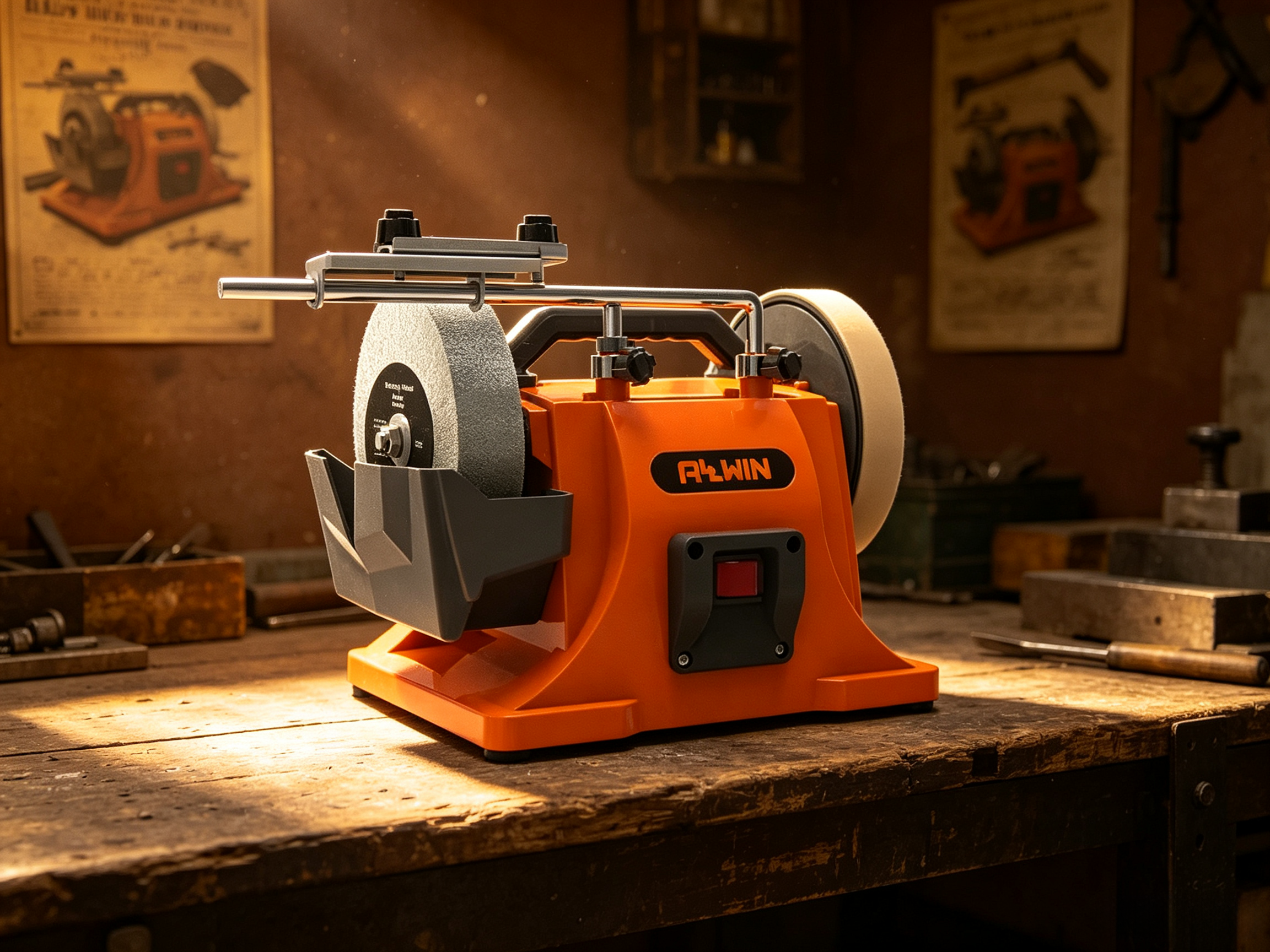
The quality of polishing does not depend on the price of the equipment. The core lies in whether it follows the general polishing process logic. Regardless of grinding any type of tool or adapting to any working scenario, there are unified process principles and quality standards. This article is completely de-divided and covers all aspects. It explains the common force principles, rhythm logic, accuracy standards, and quality judgment methods for all grinding operations, helping users unify the grinding process and completely solve the problems of grinding that is not sharp, not durable, has many defects, and has poor consistency.
1. General grinding core force principles
The core force logic of all grinding operations is the same: uniform force, constant pressure, single point contact, and gradual progress. Local heavy pressure, instantaneous impact, and force deflection are prohibited. During the grinding process, the contact area between the workpiece and the grinding wheel remains stable, the pressure is gentle and even, and the metal layer is naturally removed by the grinding force of the high-speed rotation of the grinding wheel instead of manual violent extrusion and grinding.
Violent pressure will directly lead to three general problems: high-temperature burn annealing of the cutting edge, excessive local wear of the grinding wheel, and grinding deformation of the workpiece. Eventually, the tool will not be sharp, its service life will be short, and the finished product will be scrapped. Light pressure at a constant speed is the basic prerequisite for all high-quality sanding.
2. General polishing rhythm and process logic
The general grinding of the entire series is divided into three standard processes: rough grinding, fine grinding and polishing, which are suitable for all grinding scenarios and cannot be reversed or omitted.
The core of the rough grinding stage is rapid repair, which removes tool passivation, chipping, wear and deformation layers, and corrects the overall shape. The feed amount can be moderately large to quickly complete the basic repair.
The core of the fine grinding stage is shaping calibration, reducing the feed amount, slowing down the grinding rhythm, accurately correcting the grinding angle and edge shape, eliminating the rough lines left by rough grinding, and establishing a standard edge benchmark.
The core of the polishing stage is quality improvement and optimization, using fine-grained grinding wheels and extremely light feed to remove fine burrs, polish textures, smooth the edge surface, and improve the sharpness and wear resistance of the tool. The three-process standardized operation is a common process to ensure uniform quality of all polished finished products.
3. General Angle Control Principles
No matter what kind of tool, the grinding angle follows the general principle of “unified reference, constant angle, and natural transition”. Keep the angle unchanged throughout the grinding process to avoid mid-way deviation, which will cause unevenness of the edge bevel and confusing angles, which will affect the performance. The angle fine-tuning follows the principle of small and gradual changes, eliminating large-scale adjustments to ensure smooth transition of the cutting edge and uniform force.
4. General polishing defect identification and avoidance logic
Common general grinding defects include edge burn, annealing, burr residue, rough texture, angle deviation, and local missing flesh. There is a unified avoidance plan for all defects: control the grinding pressure and contact time to avoid local high temperatures; strictly implement three-process grinding and match thickness; maintain equipment stability and accurate benchmarks; and eliminate violent feed and angular shaking.
Among them, high-temperature burn is the most common common problem that is easily ignored. It will cause the hardness of the tool material to decrease and make it easy to wear. As long as you control the intensity and rhythm of grinding and allow time for heat dissipation, it can be completely avoided.
5. General quality criteria for polished finished products
Qualified polished products meet four general standards: first, the cutting edge is smooth and smooth, with no burrs, scratches, or burns or discoloration; second, the grinding angle is regular and uniform, with natural transitions, and no local deviation; third, the cutting edge hardness is normal, with no annealing and softening problems; fourth, the overall shape is symmetrical and uniform, without eccentricity, missing flesh, or deformation. Meeting the above standards means standardized high-quality polishing.
Post time: Sep-02-2026