


Abrasive belts used with belt sanders belong to the category of coated abrasives and represent one of the most widely consumed tools for grinding, sanding, and polishing operations. With continuous advancements in abrasive materials and manufacturing technologies, their applications have expanded significantly across woodworking, metalworking, fabrication, construction, and high-precision industrial sectors.
Selecting the correct abrasive belt material is critical to achieving optimal cutting efficiency, superior surface finish, extended belt life, and improved productivity.
What Is an Abrasive Belt?
Abrasive belts are produced by bonding abrasive grains of varying grit sizes onto a backing material—commonly cloth or paper—using a high-strength bonding agent. The coated material is cut to the required dimensions and joined by a splice to form a continuous loop. When mounted on a belt sanding machine, the belt rotates at high speed, enabling material removal, surface conditioning, deburring, or polishing operations.
Common Abrasive Materials Used in Sanding Belts
1. Brown Fused Alumina (Al₂O₃)
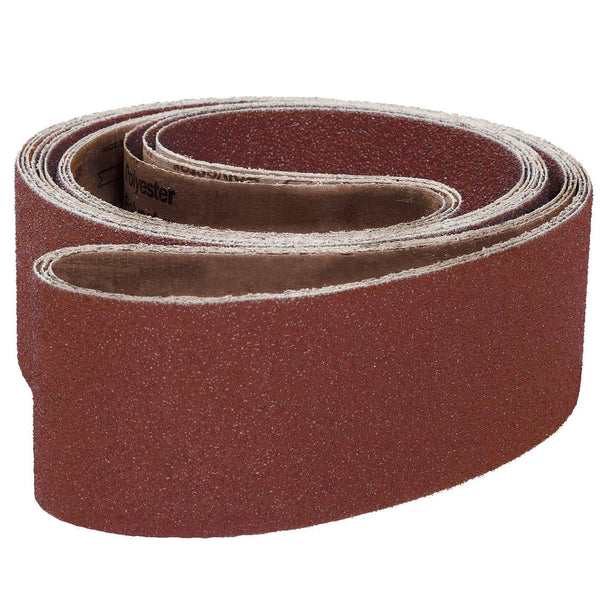
Brown fused alumina is primarily composed of aluminium oxide (Al₂O₃) and is produced by smelting bauxite, iron filings, and anthracite coal in an electric arc furnace. It offers high hardness, excellent toughness, strong grinding force, and superior resistance to heat, oxidation, and corrosion. It is widely used for grinding ordinary steel, high-carbon steel, alloy steel, and hardwoods, making it a universal abrasive.
2. Black Silicon Carbide (SiC)
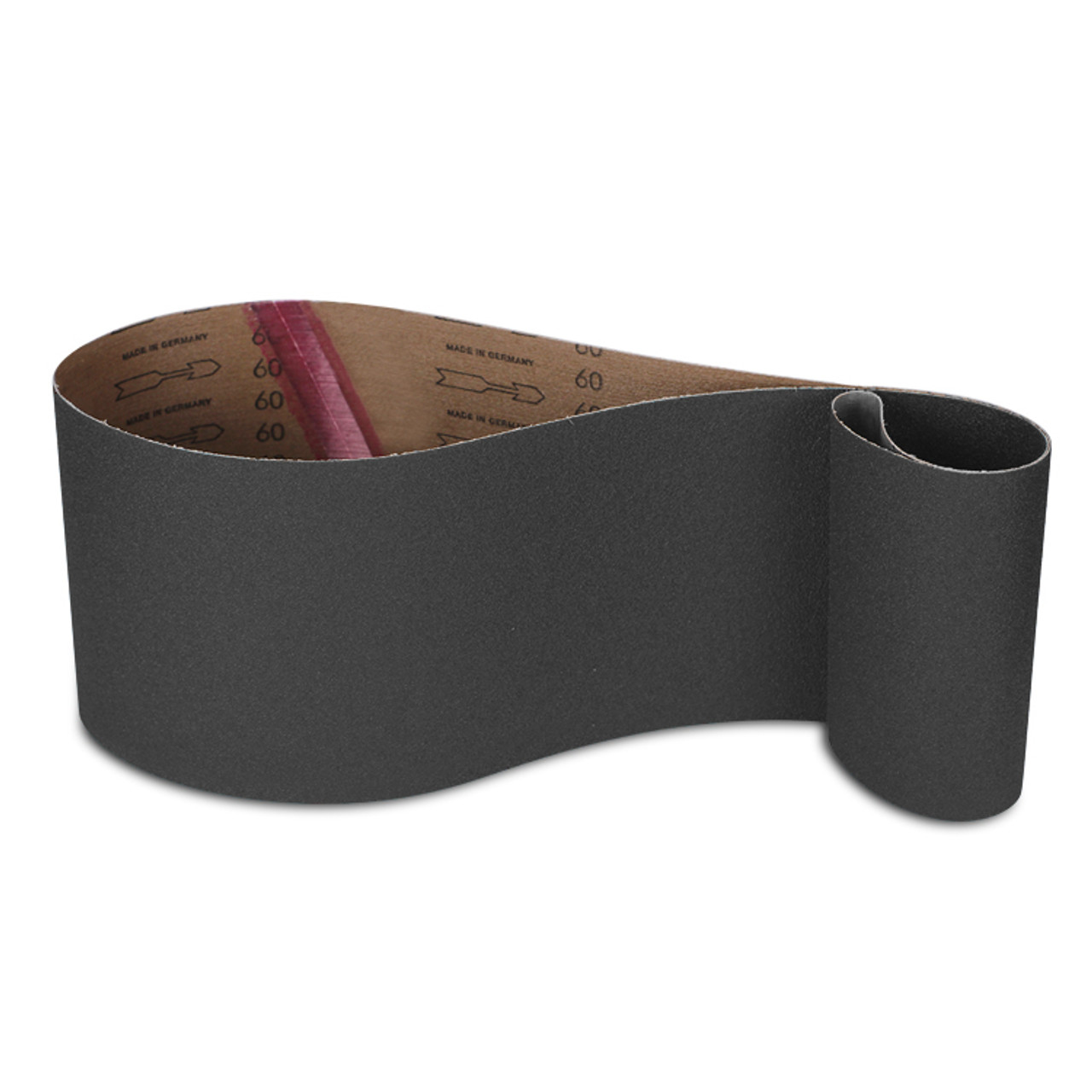
Black silicon carbide is primarily composed of SiC and is produced by smelting petroleum coke, quartz sand, and wood shavings. It exhibits extremely high hardness and sharp cutting ability but lower toughness compared to alumina abrasives. It is ideal for non-metallic materials such as plywood, MDF, bamboo panels, glass, ceramics, stone, and non-ferrous metals like aluminium and copper.
3. Zirconia-Alumina Abrasive (ZrO₂-Al₂O₃)
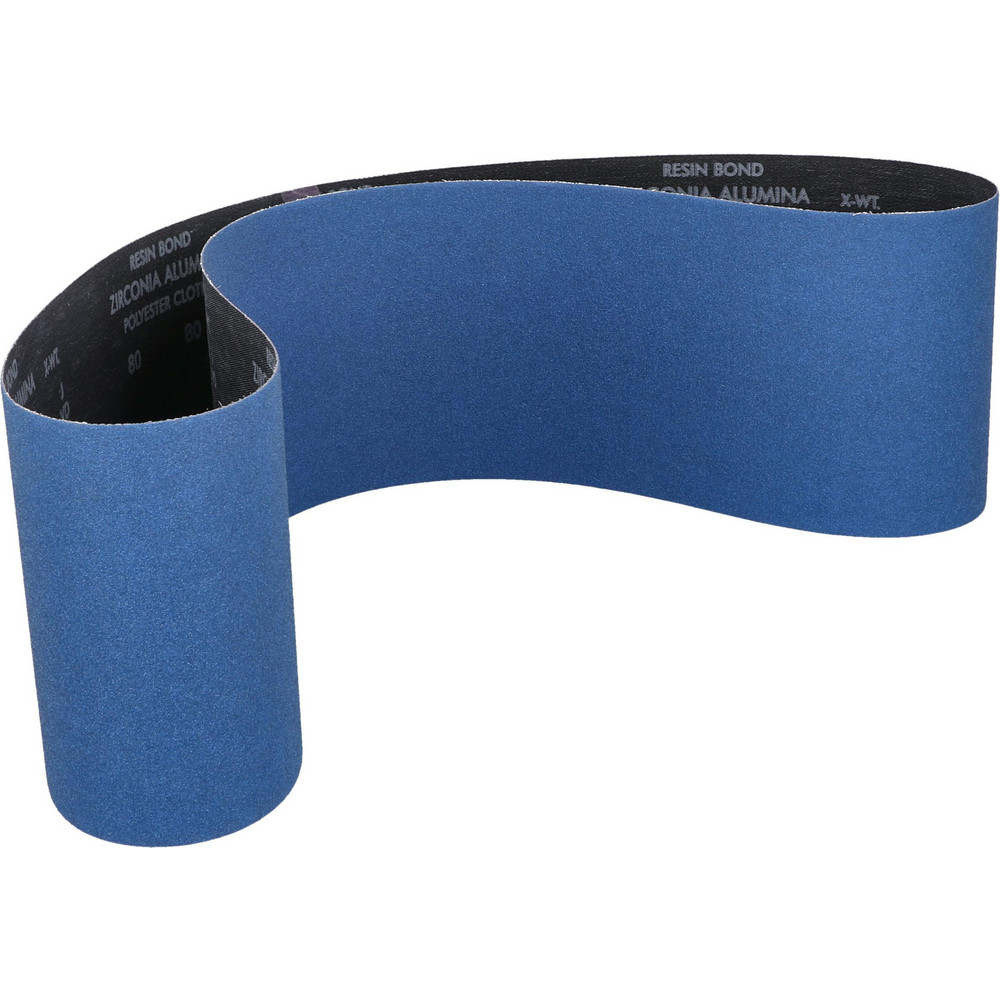
Zirconia-alumina abrasives incorporate zirconium oxide into aluminium oxide, typically with 25% or 40% zirconia content. They provide exceptional toughness, self-sharpening capability, and outstanding performance under high pressure. According to Norton Abrasives, zirconia belts achieve 254–300% higher grinding efficiency and up to three times longer belt life compared to brown fused alumina.
4. Microcrystalline Ceramic Abrasives

Microcrystalline ceramic abrasives are sintered materials produced using advanced gelation technology with crystal sizes of 1–3 micrometres. Their controlled micro-fracturing mechanism continuously exposes fresh cutting edges, ensuring consistent sharpness. Products such as 3M Cubitron and Norton SG ceramic belts demonstrate significantly higher cutting rates and metal removal efficiency.
Advanced Super-Hard Abrasives

Modern coated abrasives utilising synthetic diamond and cubic boron nitride (CBN) have been developed for machining cemented carbides, quartz components, and ultra-hard steels. These abrasives provide unmatched precision, durability, and performance in specialised industrial applications.
Conclusion
The performance of a belt sander depends not only on the machine itself but also on selecting the correct abrasive material. From versatile brown fused alumina to high-performance ceramic and super-hard diamond abrasives, each material serves a specific role. At ALLWIN Power Tools, understanding abrasive technology enables users to achieve higher efficiency, superior surface quality, and longer belt life.
Post time: Jan-12-2026